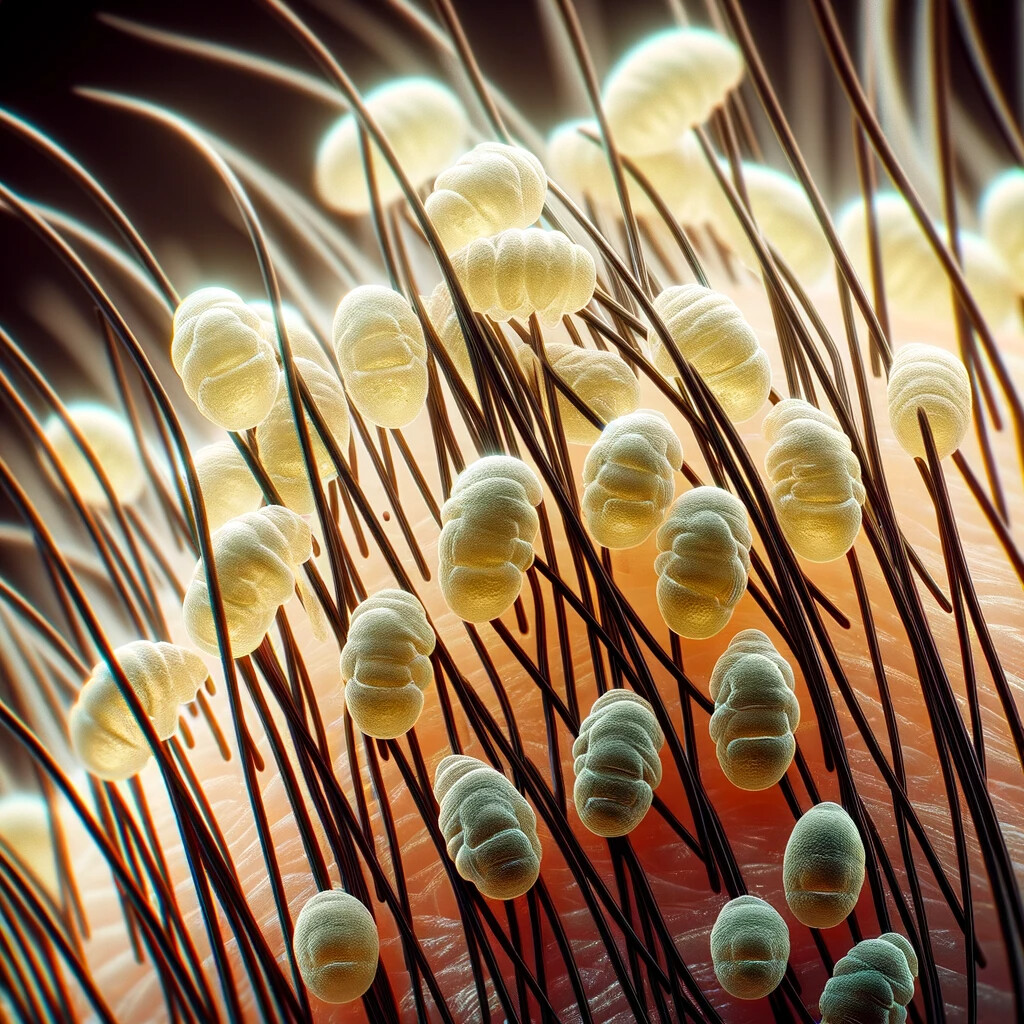
The Shocking Truth: How to Tell Live vs. Dead Lice Eggs - Can You Spot the Difference?
When dealing with a head lice infestation, one critical aspect of treatment is distinguishing between live and dead lice eggs (nits). In this article, we'll explore the important differences between live and dead lice eggs and provide guidance on how to identify them accurately.
Live Lice Eggs (Nits):
Color: Live lice eggs are typically tan, brown, or grayish-white in color. They may appear translucent or slightly shiny.
Attachment: Live nits are firmly attached to the hair shaft, usually within ¼ inch (6 mm) of the scalp. They are glued in place by the female louse using a sticky substance.
Shape: Live nits are oval-shaped and have a consistent, symmetrical form.
Viability: Live nits contain developing lice embryos. If you see a tiny dark spot inside the nit, it indicates that the egg is alive.
Position: Live nits are usually situated close to the scalp where the temperature is ideal for lice development.
Dead Lice Eggs (Nits):
Color: Dead lice eggs often appear to be white or yellowish in color. They may lose their translucency and look matte.
Attachment: Dead nits may be loosely attached to the hair shaft or may have partially detached, making them easier to remove.
Shape: Dead nits may become misshapen or flattened. They can lose their uniformity.
Viability: Dead nits do not contain developing lice embryos. They are non-viable and will not hatch into lice.
Position: Dead nits can be found at various distances from the scalp, including further down the hair shaft as they naturally move away from the scalp during hair growth.
How to Tell the Difference:
To determine whether a nit is live or dead:
Examine the Color: Check the color of the nit. If it appears tan, brown, or grayish-white, it is more likely to be live. If it appears white or yellowish, it may be dead.
Test for Attachment: Try to slide the nit along the hair shaft. Live nits will be firmly attached and difficult to move, while dead nits may slide more easily.
Inspect the Shape: Observe the shape of the nit. Live nits are generally symmetrical, while dead nits may be misshapen or flattened.
Look for Dark Spots: If you can see a tiny dark spot inside the nit, it indicates a live egg.
Accurate identification of live vs. dead lice eggs is crucial for effective lice treatment. Removing live nits is essential to prevent future infestations, while dead nits can be removed for cosmetic purposes.
For more information on this topic and visual aids to help you spot the difference, you can visit https://licebustersnyc.com/about-head-lice/shocking-truth-how-to-tell-live-vs-dead-lice-eggs-can-you-spot-the-difference/